
If you want to see the future of renewable energy, don’t turn to Silicon Valley but rather look to the dusty ranchlands of West Texas.
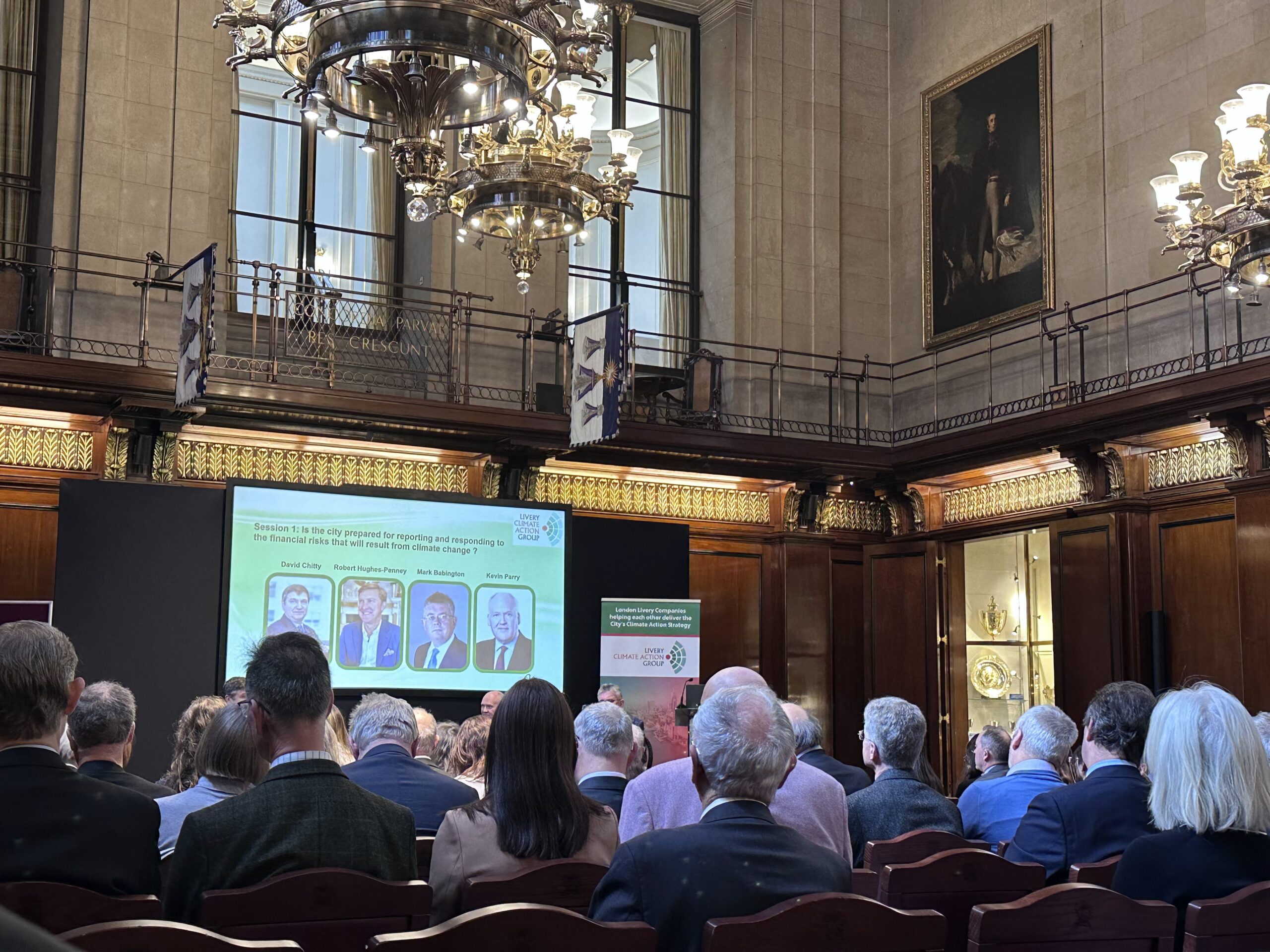
During the Livery Climate Action Group (LCAG) conference on January 26th at the historic Merchant Taylors’ Hall, Baroness Brown of Cambridge (Chair of the Adaptation Committee of the CCC) shared a startling statistic: Texas is currently home to the fastest-growing solar rollout in the United States. The reason isn’t purely ideological—it’s survival. Faced with hotter, drier seasons that are decimating traditional crop yields, Texas farmers are “harvesting” the sun to stabilize or even increase their incomes. Called ‘agricoltaics’, combining solar and farming can even increase land productivity for farmers by 35-70% by double using land for both solar energy as well as grazing and specialized shade-tolerant crops.
This is the face of pragmatic climate action: adaptation driven by economic necessity. It provides a rare, optimistic note in the climate discourse—showing that when the tools are available, even the most traditional sectors will pivot to protect their future. However, as the conference progressed within the ornate, centuries-old walls of the City of London, a stark contrast emerged. While Texas has the space to pivot, London faces a labyrinth of legacy constraints. Yet, it is precisely within these constraints that the UK is forging a new identity as the global nerve center for climate finance.
The Readiness Gap: A Reality Check
The central theme of the day was the “Readiness Gap.” Baroness Brown presented the Climate Change Committee’s (CCC) 2025 report to Parliament, and the verdict was sobering. Scoring the UK’s policies, plans, and delivery across five key areas – ‘Economy’, ‘Health & Wellbeing’, ‘Infrastructure’, ‘Built Environment & Communities’, and ‘Land, Nature, and Food’ – the report reveals the hard reality that the UK’s progress in adapting to climate change remains “insignificant” across all key areas.
The data presented by Dr. Pierre Masselot of the London School of Hygiene and Tropical Medicine hammered home why we must pay attention. By 2080, we can expect about 56 days of heatwaves per year, which will have serious consequences for human health, economic productivity, supply chains, food productions, disease, water availability, and more.
This isn’t just about the future though. We are already seeing the cost today: 37% of heat-related deaths in Europe are now attributed to climate change. In the scorching summer of 2022, over 60,000 people died across Europe due to heat, with over 1,000 in the UK in just a three-day window.
For society, this isn’t just a tragedy; beyond the rising death toll there are a range of other significant consequences, including lower productivity, rising liabilities, lower quality of life, loss of nature, and more – all impacting us already today and with mounting financial costs the longer we go on miscalculating or undercounting these costs, as the Institute and Faculty of Actuaries have done in their just-released Parasol Lost report, which calls for a Planetary Solvency Plan to avoid catastrophic human, societal, and economic impacts. If Actuaries are saying this, we should most definitely listen.
The Financial Blind Spot
Perhaps most concerning for the City was the revelation that 30% of banks are failing to look past 2040 in their projections. This represents a massive “climate blind spot” in mortgage and asset valuation. If a bank isn’t accounting for flood or heat risks on a 30-year mortgage being issued today, they are mispricing risk on a systemic scale.
This is where the role of high-quality carbon instruments becomes vital. As regulatory pressure mounts, financial institutions will desperately need reliable tools to hedge their environmental exposure. We are moving toward a world where “carbon literacy” is as fundamental to a banker as compound interest.
London’s Unique Paradox
The conference highlighted London’s unique struggle. Three-quarters of the City remains gas-dependent, and our electrical grid is essentially at capacity. We are operating a 21st-century economy on 19th-century infrastructure.
Dr. James Ritson highlighted the “efficiency wall” facing our legacy buildings. For a typical Victorian or Edwardian property, reaching 40% efficiency might cost £3,000; reaching 100% can soar to £40,000. In a city defined by its cultural heritage and Grade I listed buildings—like the Merchant Taylors’ Hall itself—we cannot simply “retrofit” our way to zero. There will be a persistent “carbon tail”—emissions that cannot be eliminated through engineering alone. This necessitates a robust, regulated market for carbon offsets to bridge the gap while the grid catches up.
The silver lining? Sustainability pays. Data from BREEAM suggests that certified sustainable buildings command rents 12.3% higher than their non-certified counterparts. Green is no longer just a color; it’s a premium.
The Shift to Embodied Carbon
The conversation is also shifting from how a building operates to how it is made. We are seeing a pivot toward measuring “embodied carbon”—the footprint of steel, glass, and cement. Planning departments are now asking developers to justify their material choices. As developers realize they cannot reach Net Zero through timber and low-carbon concrete alone, the demand for regulated, high-quality carbon mitigation strategies will only grow.
A Global Leader in the Making
Despite these physical constraints, London is positioning itself as the “Global Capital of Transition Finance.” As outlined recently by the Policy Chairman of the City of London Corporation, the UK is vying for the top spot in climate insurance, reporting, and sustainable investment.
London’s strength isn’t in its sun-drenched fields, but in its expertise. We are the world’s laboratory for climate disclosure and risk management. We are moving from the “voluntary” era of climate action into the “mandatory” era of climate accounting.
Maui Wisdom
Mark Babington, Executive Director of Regulatory Standards, closed with a poignant reminder: the “Maui Principle.” It is the simple idea that we must not leave liabilities for future generations.
The Texas farmer installs solar panels to ensure his children can keep the land. The City of London must now build the financial infrastructure to ensure the global economy can survive the transition. We are currently in a race between the “Readiness Gap” and our capacity for innovation. The LCAG conference made one thing clear: the time for “planning” has passed. The era of “delivery”—and the sophisticated markets required to support it—is here. London has a unique opportunity to take a global leadership role across finance, insurance, the built environment, infrastructure, and more to guide policy and action, and show what’s possible in the face of constraints.
Comments are closed.

